- Type: Home Accents
Grand Tour French Leather Lidded Box with Key
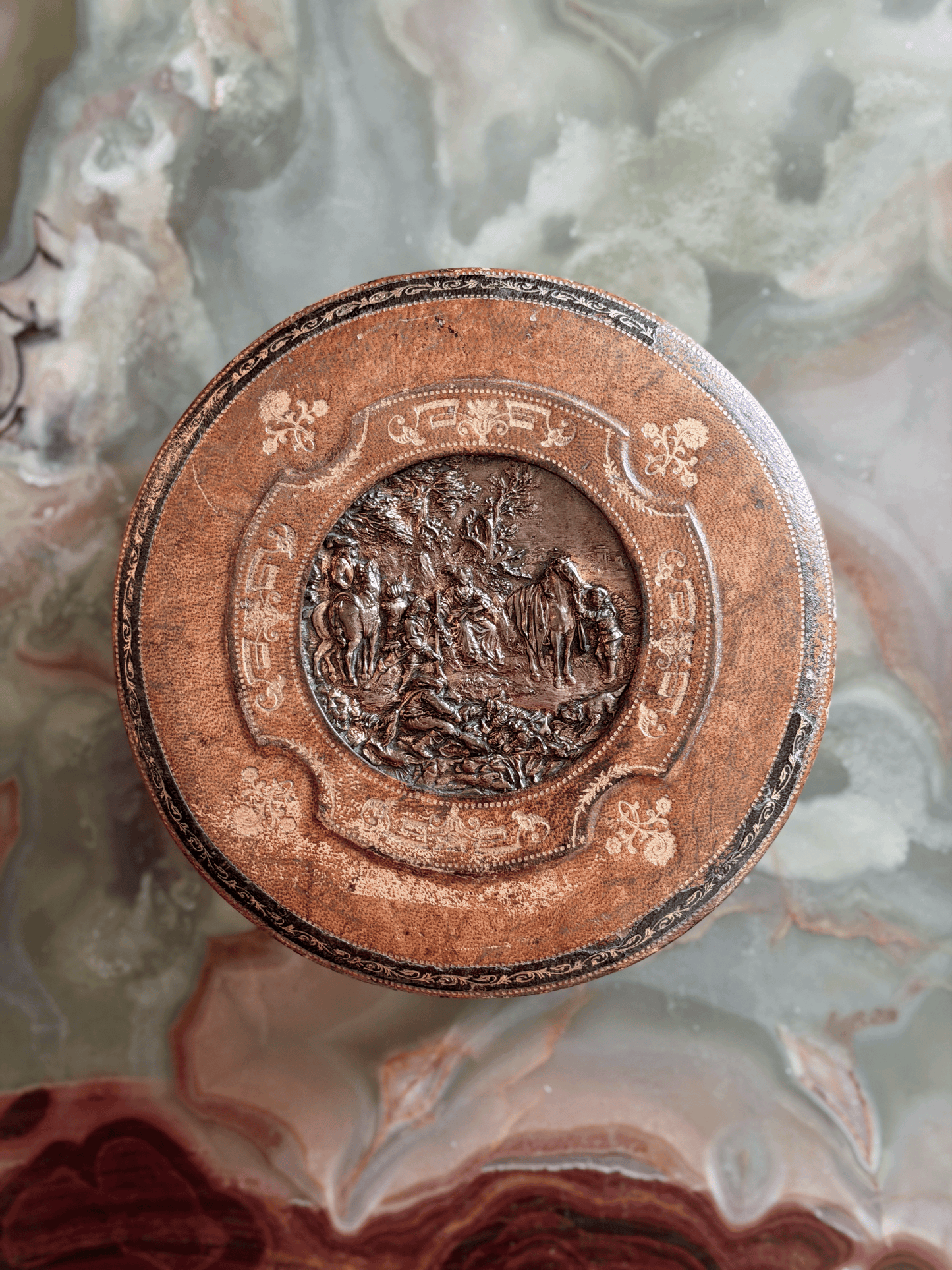
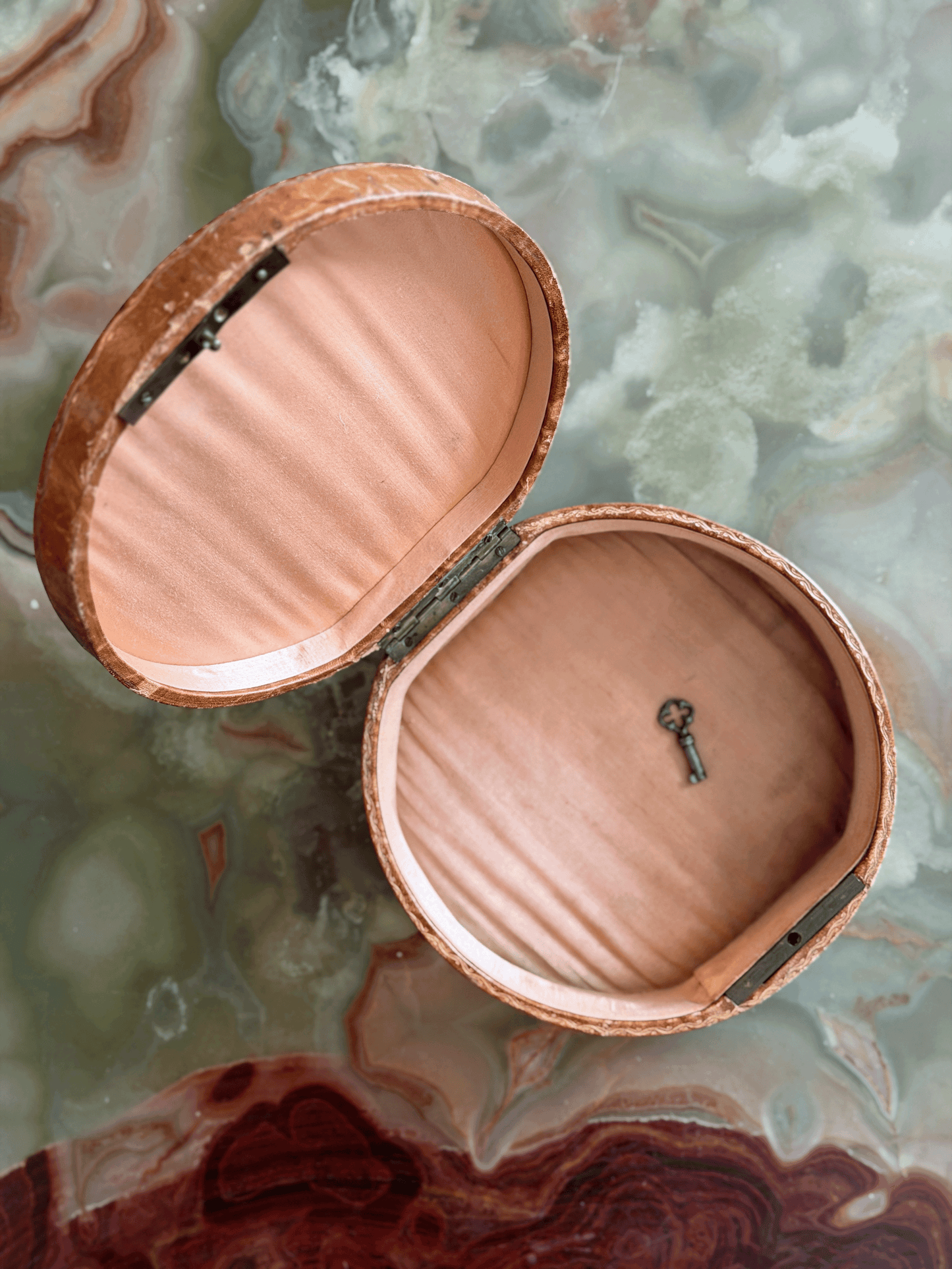
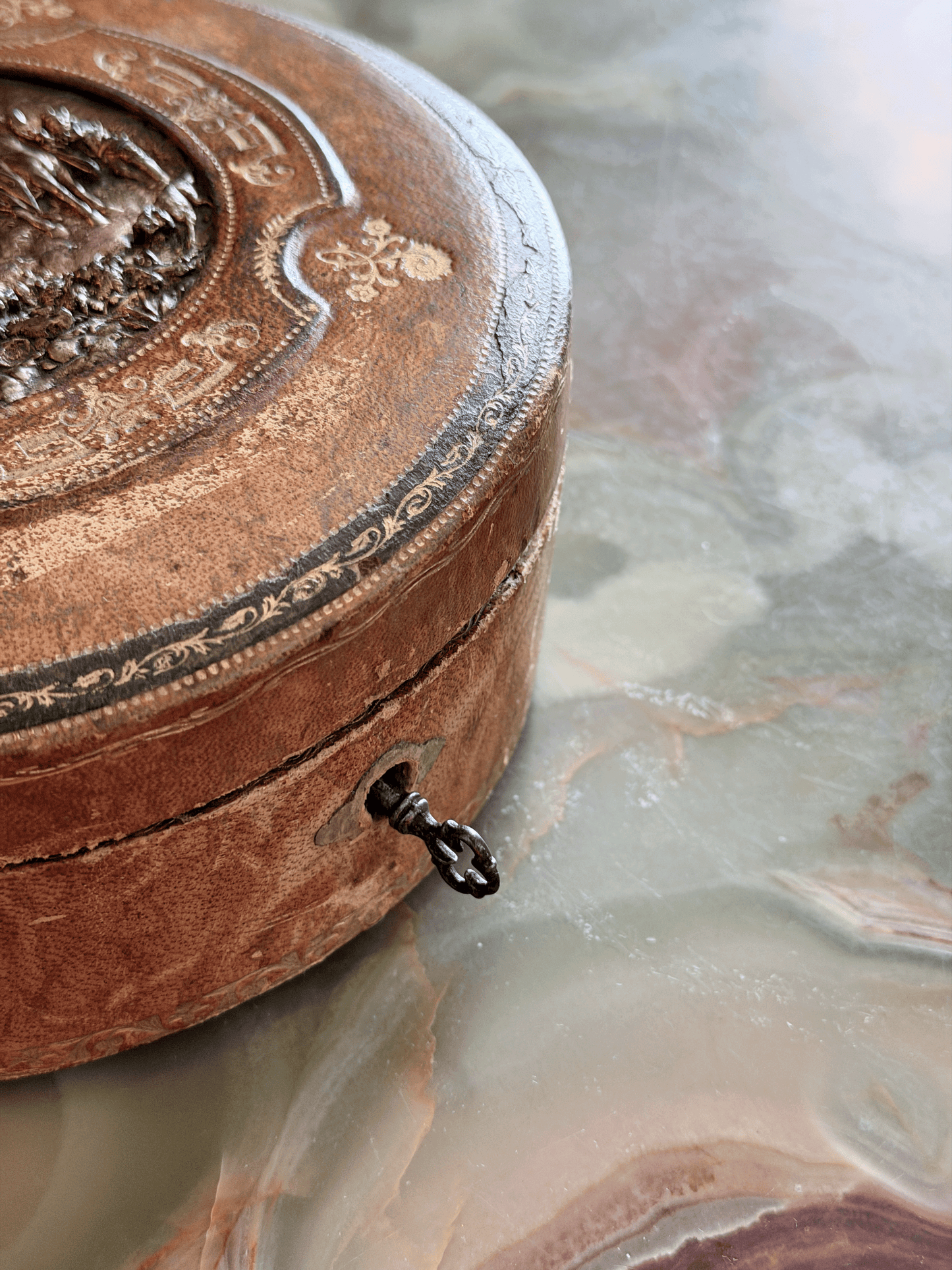
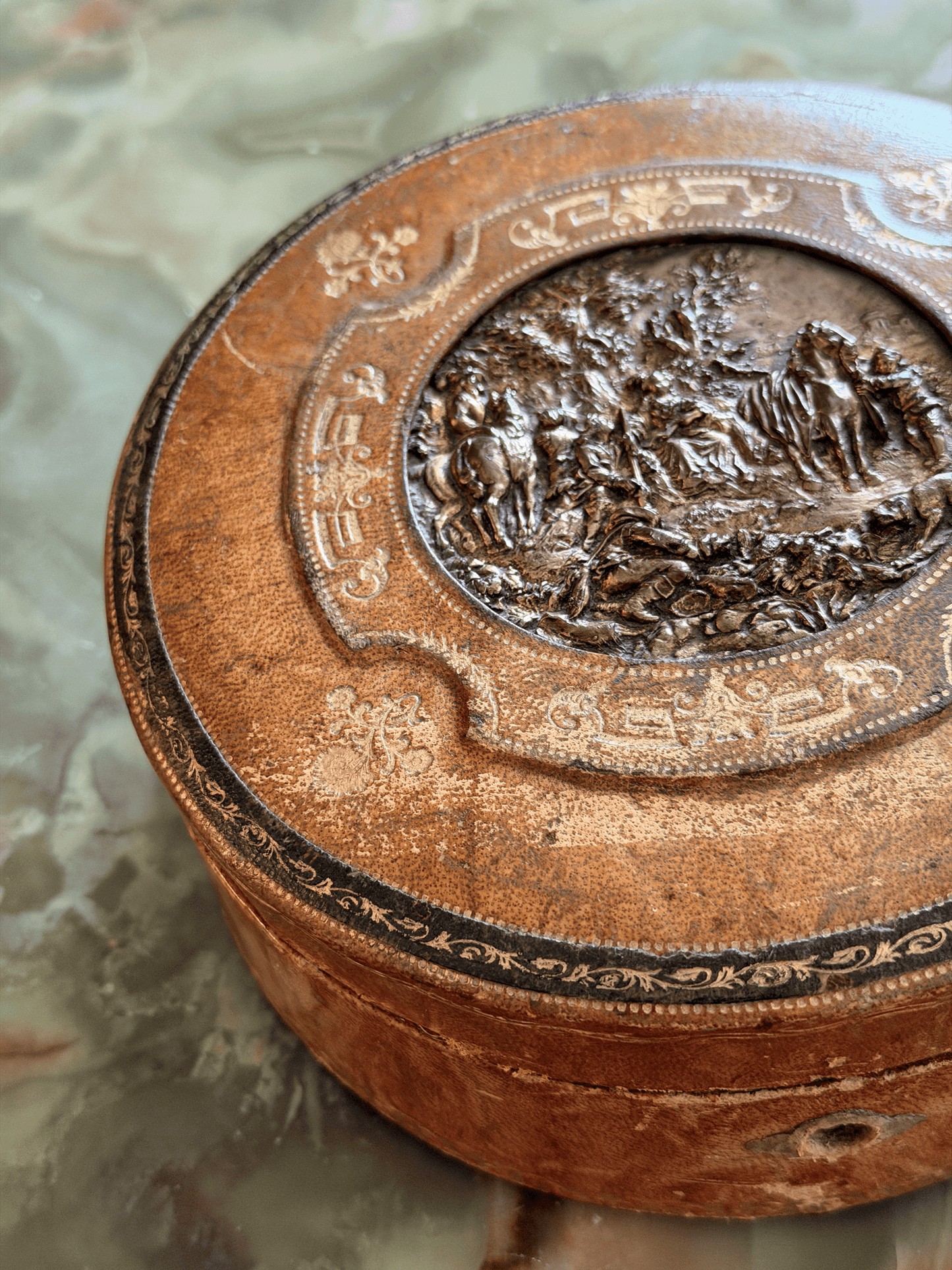
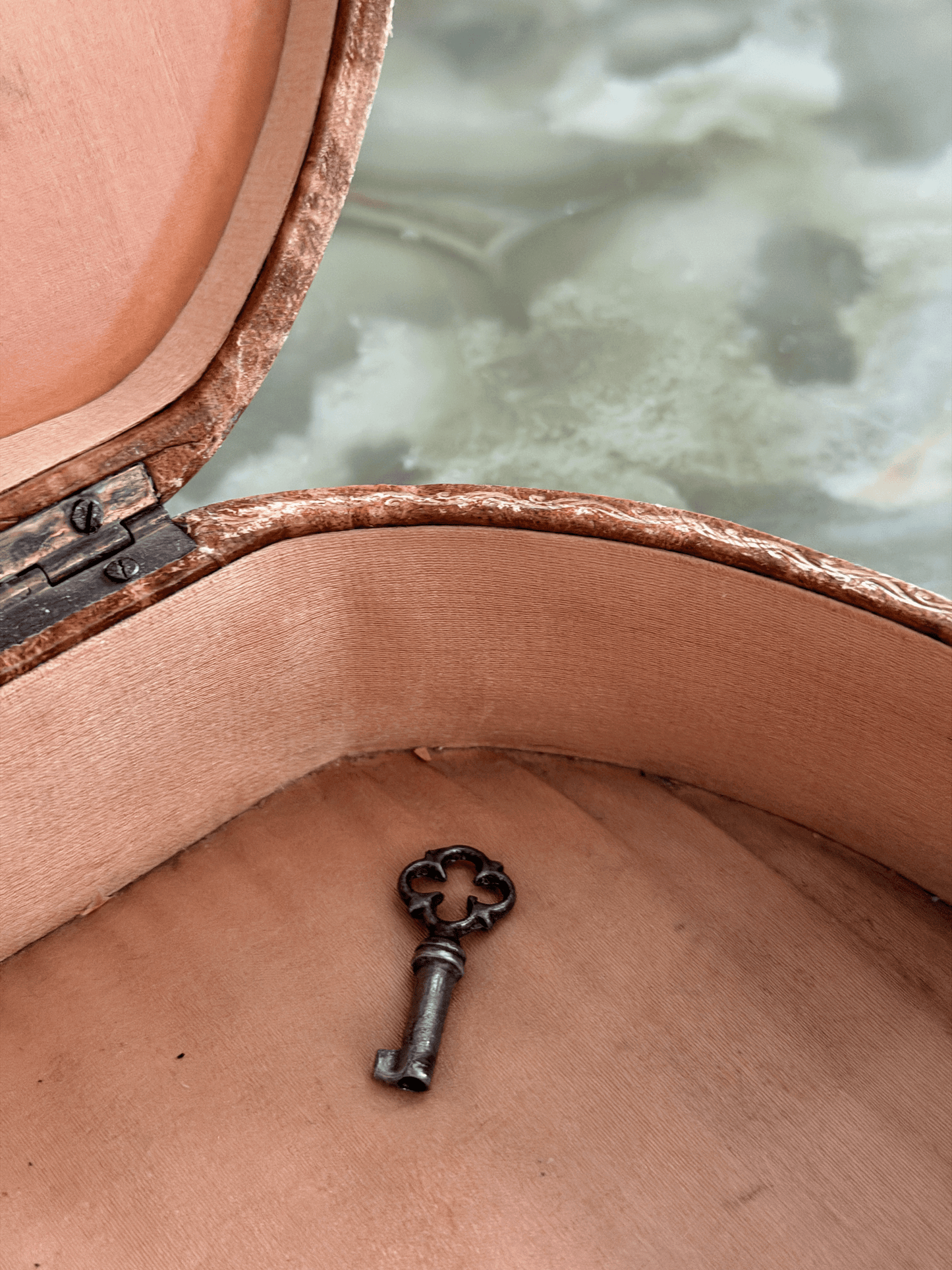
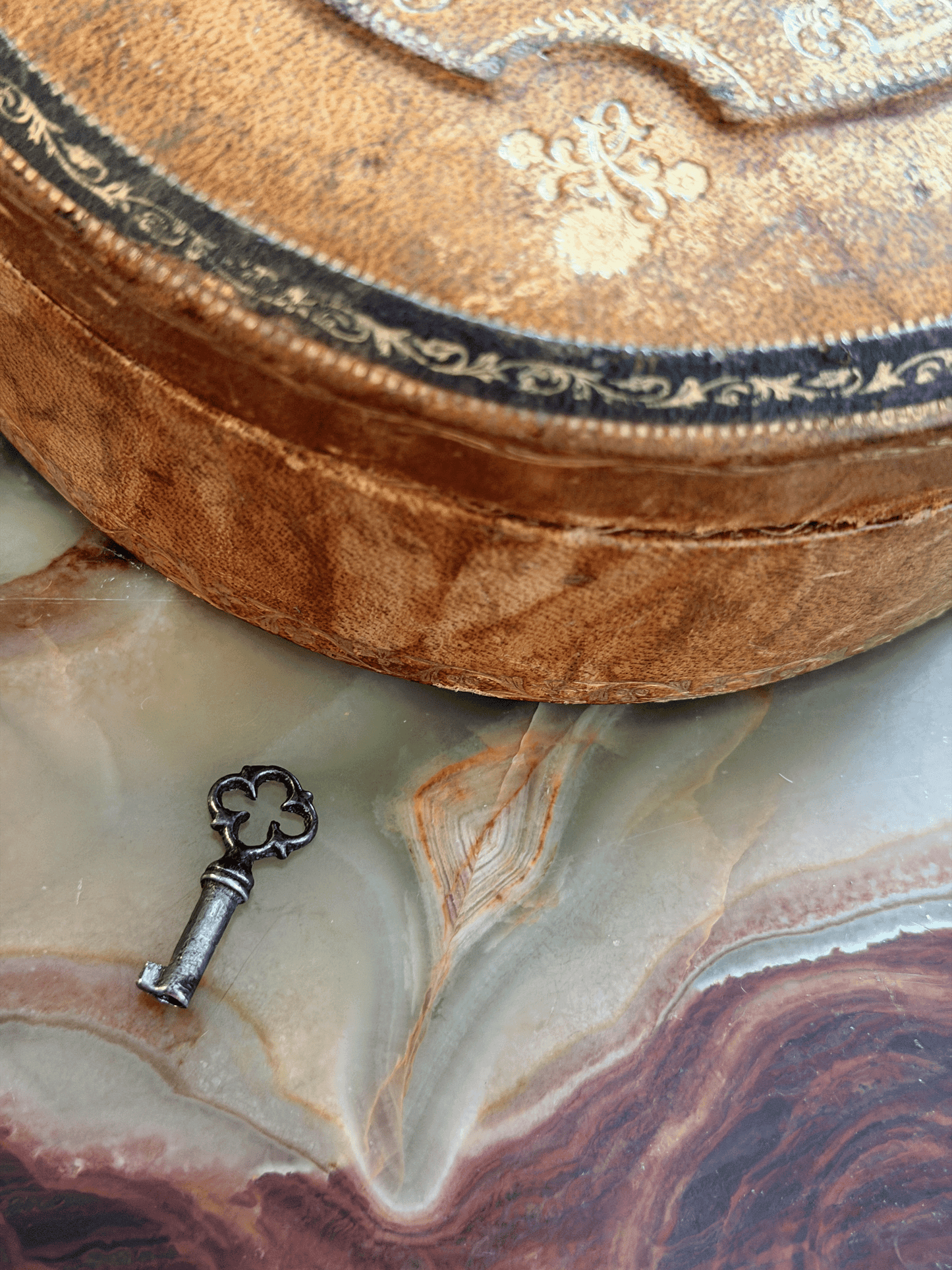
A French leather box with original key, from the twentieth-century version of the Grand Tour. The lid features a high-relief repoussé bronze medallion depicting a Fête Champêtre — a classic 17th-century European pastoral or "garden party" scene, a highly favored motif for late-19th and early-20th-century luxury vanity items.
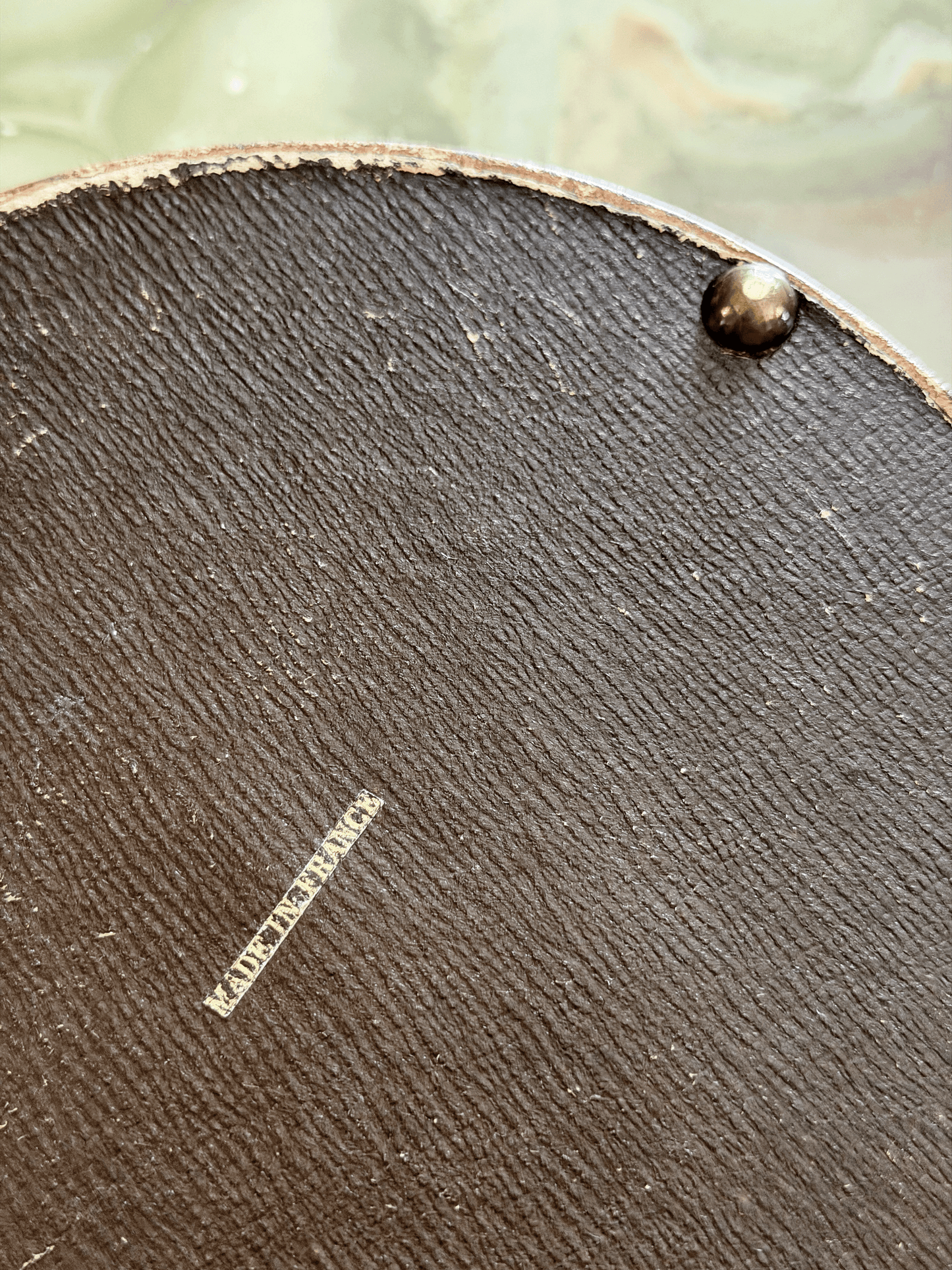
Stamped Made in France, which places it between 1910 and 1930.
The Grand Tour was a traditional rite of passage for wealthy, upper-class European young men (predominantly British) from the late 17th through the mid-19th centuries. It served as an educational coming-of-age journey to absorb classical art, history, and languages.
Couldn't load pickup availability
Return Policy
Each piece in our collection is one of a kind. As such, all sales are final — a reflection of the singular nature of what we offer. We are happy to answer any questions prior to your purchase to ensure every piece is the perfect fit.
In the rare event that a piece arrives damaged, we will do everything in our power to make it right. We work closely with our shipping partners and will always do our best to remedy the situation on your behalf.
In either instance, reach out to us at hello@shoppestory.com and we will be glad to help.
More Information
Need more information before you're ready to purchase? Reach out to us at hello@shoppestory.com or call us at (317) 501-7953 during business hours: Monday - Saturday 10am - 4pm.
Description
A French leather box with original key, from the twentieth-century version of the Grand Tour. The lid features a high-relief repoussé bronze medallion depicting a Fête Champêtre — a classic 17th-century European pastoral or "garden party" scene, a highly favored motif for late-19th and early-20th-century luxury vanity items.
Stamped Made in France, which places it between 1910 and 1930.
The Grand Tour was a traditional rite of passage for wealthy, upper-class European young men (predominantly British) from the late 17th through the mid-19th centuries. It served as an educational coming-of-age journey to absorb classical art, history, and languages.